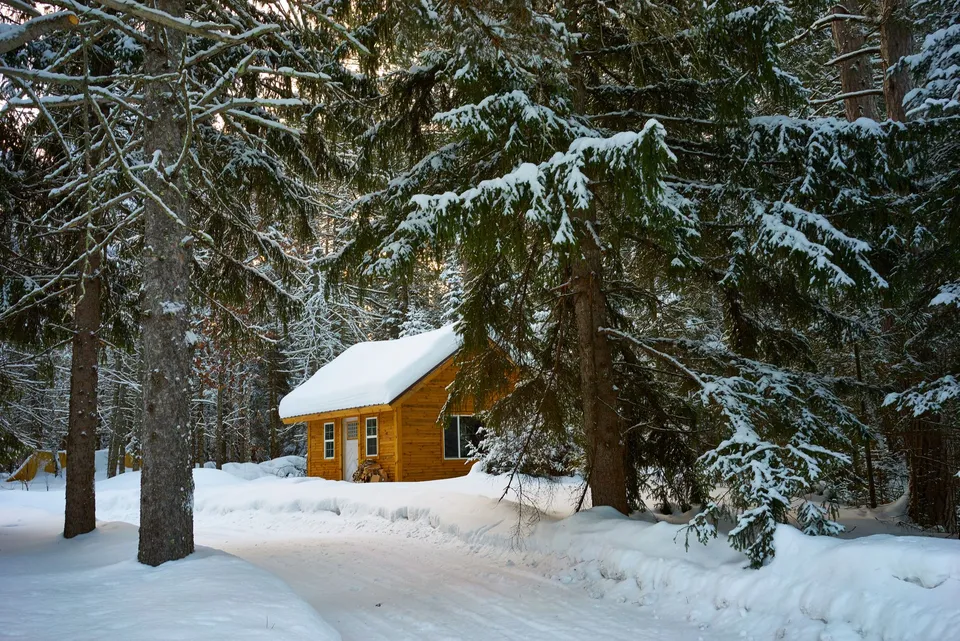
On the North Shore, a resort job offer can look simple until you split it into two separate questions: where you sleep, and how you get to work. At Golden Eagle Lodge on the Gunflint Trail, those are not the same thing. The lodge says it offers staff housing for about $150 a month in a shared building, but it also says the property is 27 miles, or roughly 45 minutes, from the nearest town and has no public transportation on the Trail . That one detail changes how an applicant should read the whole offer.
Housing can lower rent pressure without solving the commute
For a remote resort, staff housing is often a real advantage, but it is not automatically a full logistics plan. A room on site can reduce rent pressure, simplify the first day, and keep a worker closer to opening shifts. It does not necessarily solve grocery runs, appointments, banking, car repairs, or the simple problem of getting off property when the day ends.
That is why the wording matters. Golden Eagle’s published housing is unusually specific: shared housing, individual lockable bedrooms and bathrooms, utilities and internet included, and a low daily cost . But the same page also says employees need their own vehicle because the property is remote and there is no public transit on the Gunflint Trail . For an applicant, that means the real question is not, “Is housing offered?” It is, “Does the housing match the rest of my life and the timing of the shifts?”
That distinction matters even more in northern Minnesota, where distances are part of the job. In DEED’s county profiles, Cook County’s median monthly rent was $886 and 41.0% of renters were cost-burdened, while Crow Wing County’s median monthly rent was $971 and 44.5% of renters were cost-burdened . Those are county household figures, not resort room rates, but they help explain why an on-site room can look attractive in a remote area. They also show why a property should never assume that every worker can absorb a long commute plus off-site housing costs.
County averages help, but they do not describe a single resort
A common mistake is to treat county commute patterns as if they describe every local shift. They do not. DEED’s 2020–2024 ACS figures show that 84.1% of Crow Wing County resident workers worked within the county and 83.0% traveled by car, truck or van, with a mean commute of 23.1 minutes. Cook County’s profile shows 69.1% traveling by car, truck or van, 21.6% working at home, and a mean commute of 16.6 minutes .
Those numbers tell you that car travel is normal in both places, but they do not tell you whether a road will be plowed before an early breakfast shift, whether a late dinner close will line up with your ride, or whether a worker without a vehicle can realistically take the job. That is why resort employers should avoid vague phrases like “easy access” if the site is a long way from town. And applicants should not assume that “North Shore” automatically means a short drive from everyday services.
The season changes the job, not just the scenery
At a small remote property, the season can change the work mix as much as the guest count does. Golden Eagle Lodge describes itself as a summer resort and campground and a winter Nordic ski center. It says it typically has six to eight employees and cross-trains them, and its listed duties include lawn mowing, boat cleaning, wood handling, campground maintenance, trail work and housekeeping . Its published typical schedule is five eight-hour days with two consecutive days off .
That matters because a job that looks like one thing in July can look different in January or during shoulder season. A worker hired for outdoor guest support may still be asked to help with housekeeping. A person comfortable with boats may not be the right fit for winter trail work. A manager who expects the same staffing pattern year-round can be disappointed unless the posting explains how duties shift when summer recreation slows down.
This is not just a staffing quirk. It is the whole operating model. In a small property, cross-training is not a buzzword; it is how the property covers absences, weather changes, guest turnover and seasonal transitions. But cross-training still needs boundaries. Being willing to help is not the same thing as being fully prepared for every task.
Questions that help applicants read the offer correctly
If you are considering a remote resort or lodge job, the best questions are concrete:
- Is the housing on site, shared, seasonal, or tied to employment?
- What is the exact cost, and what is included?
- Do I need my own vehicle every day, or only sometimes?
- What happens to the schedule when the property moves from summer operation to winter or shoulder season?
- Which tasks are routine, and which ones are only occasional cross-coverage?
- If I do not live nearby, what does the employer expect about travel in bad weather?
Those are not picky questions. They are the difference between a job that fits and a job that quietly becomes expensive.
What employers can say more plainly
For employers, the lesson is just as practical. A posting becomes much more useful when it separates housing, transportation and seasonality instead of folding them into one vague paragraph.
Say whether the property provides staff housing, and say what it costs. Say whether a vehicle is required. Say whether the role shifts between guest service, housekeeping, grounds, kitchen support or recreation work as the season changes. If a property is far from town, say so directly instead of hoping the applicant discovers it late.
That kind of clarity does two things at once. It helps applicants self-select honestly, and it protects the property from turnover caused by mismatched expectations. On a remote lake or trail property, the strongest recruiting message is often not enthusiasm. It is precision.
A North Shore resort job can be a good fit for the right person, but only if the offer answers the two logistics questions separately: where you will stay, and how you will get there. If you are applying, compare those details to your own transportation and season plans before you say yes. If you are hiring, put both facts in the posting so the right people can recognize the job quickly.